Readings:
I found the first reading, Evocative Objects by Sherry Turkle, particularly interesting, especially the stories about the cello and the mummy. Both made me think a lot about our time capsule project and how objects can carry meanings that go far beyond their physical appearance or original purpose. I think it's fascinating how something that might seem ordinary or even meaningless to one person can represent memories, emotions, and important experiences to someone else.
These stories also made me reflect on how we develop personal connections with objects and how those connections can change depending on our experiences and perspectives. This was especially important for my time capsule because I wanted to focus not necessarily on preserving the objects themselves, but on preserving the stories behind them. The reading helped me realize that sometimes what makes an object valuable isn't the object itself, but the memories and meanings we associate with it. It also made me think about how easily those stories can be lost if nobody is there to tell them.
What is an object that you feel truly represents who you are, not just because it holds personal importance, but because it reflects your personality, identity, or way of seeing the world, much like the objects described in the reading?
Video:
I found the story of Tipu's Tiger really interesting, especially how the meaning of an object can change depending on who owns it and how they interpret it. What originally represented power and resistance for Tipu Sultan later became a symbol of British victory and eventually a historical object displayed in a museum. I think it's fascinating how the same object can carry completely different meanings depending on the person, culture, or historical context surrounding it. Even though the object itself hasn't changed, the stories and emotions associated with it have evolved over time.
This made me reflect on how objects don't necessarily have one fixed meaning. Instead, their significance can change as they pass from one person to another or across different generations. I also find it interesting how we sometimes focus on what an object represents to us without considering what it might have meant to its original owner. It shows how objects can preserve history and memories, but also how their meanings can be transformed or even misunderstood over time.
Time Capsule – Concept and Proces
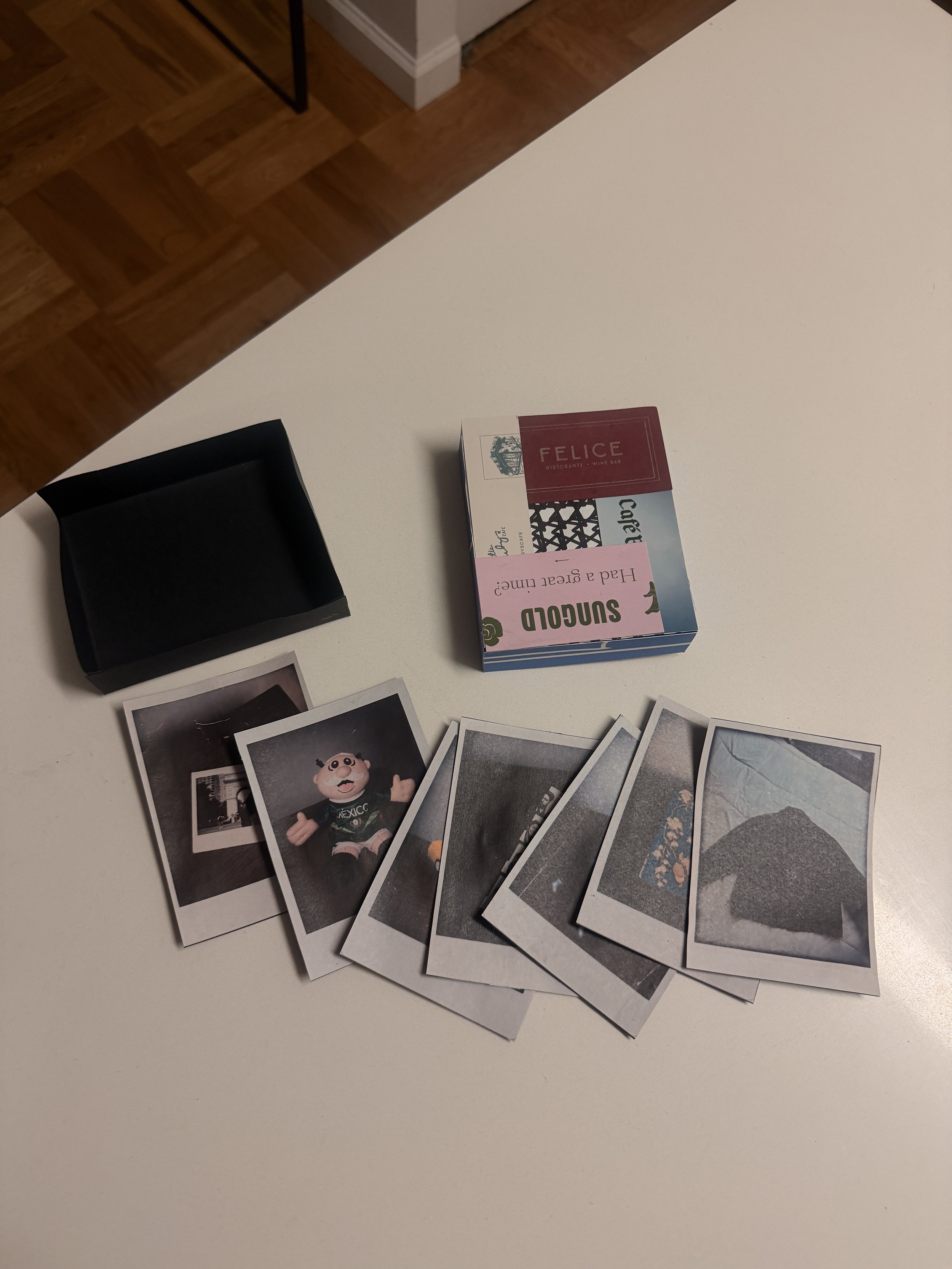
My Concept
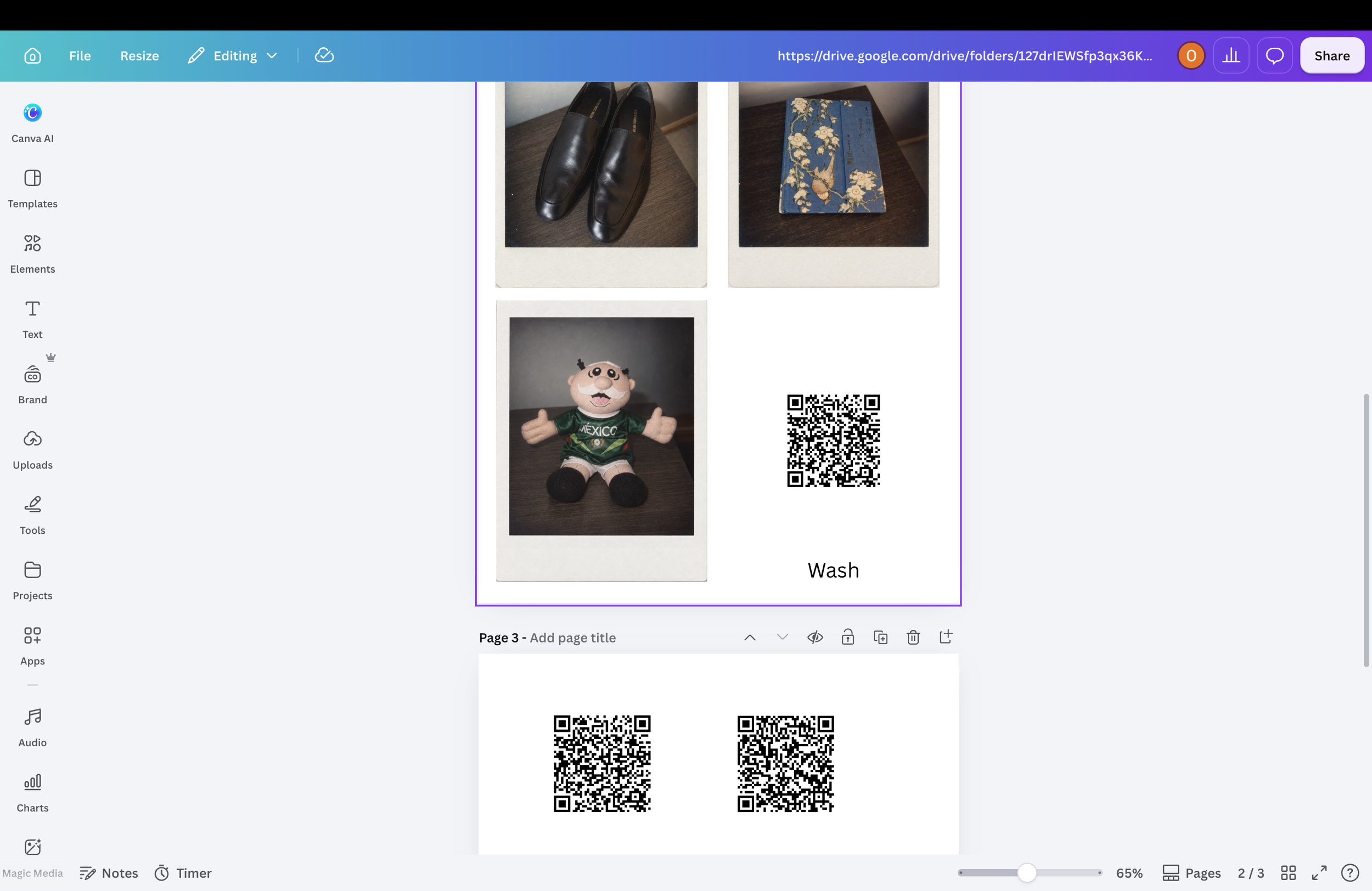
For my time capsule, I wanted to explore a different approach. Instead of creating a large capsule to physically hold objects, I decided to preserve photographs of them, designed in a Polaroid style. On the back of each photograph, I included a QR code that leads to an audio recording of me narrating the story behind that particular object.
I chose this approach because I believe that sometimes the objects themselves are not as important as what they represent. An ordinary object can hold memories, emotions, experiences, and connections that may not be obvious to someone else. Through this time capsule, I wanted to show that we can preserve and share the meaning of objects without necessarily preserving the physical objects themselves.
I also wanted to incorporate sound because I believe that hearing someone's voice adds another layer of connection to their memories. Instead of simply looking at an object and guessing its meaning, someone can hear directly from me why I chose it and what it represented during this period of my life.
The Future Archaeologist
125 years from now, an NYU student sneaks into an abandoned storage room filled with old student projects. In this future, phones no longer exist as separate devices; technology is integrated into people's bodies. Unfortunately, the student forgets to turn off their location tracking.
While exploring, they discover a box containing a few surviving time capsules. Most projects have been thrown away, but mine remains because of its small size. As someone approaches, the student grabs the box and escapes through the ventilation system.
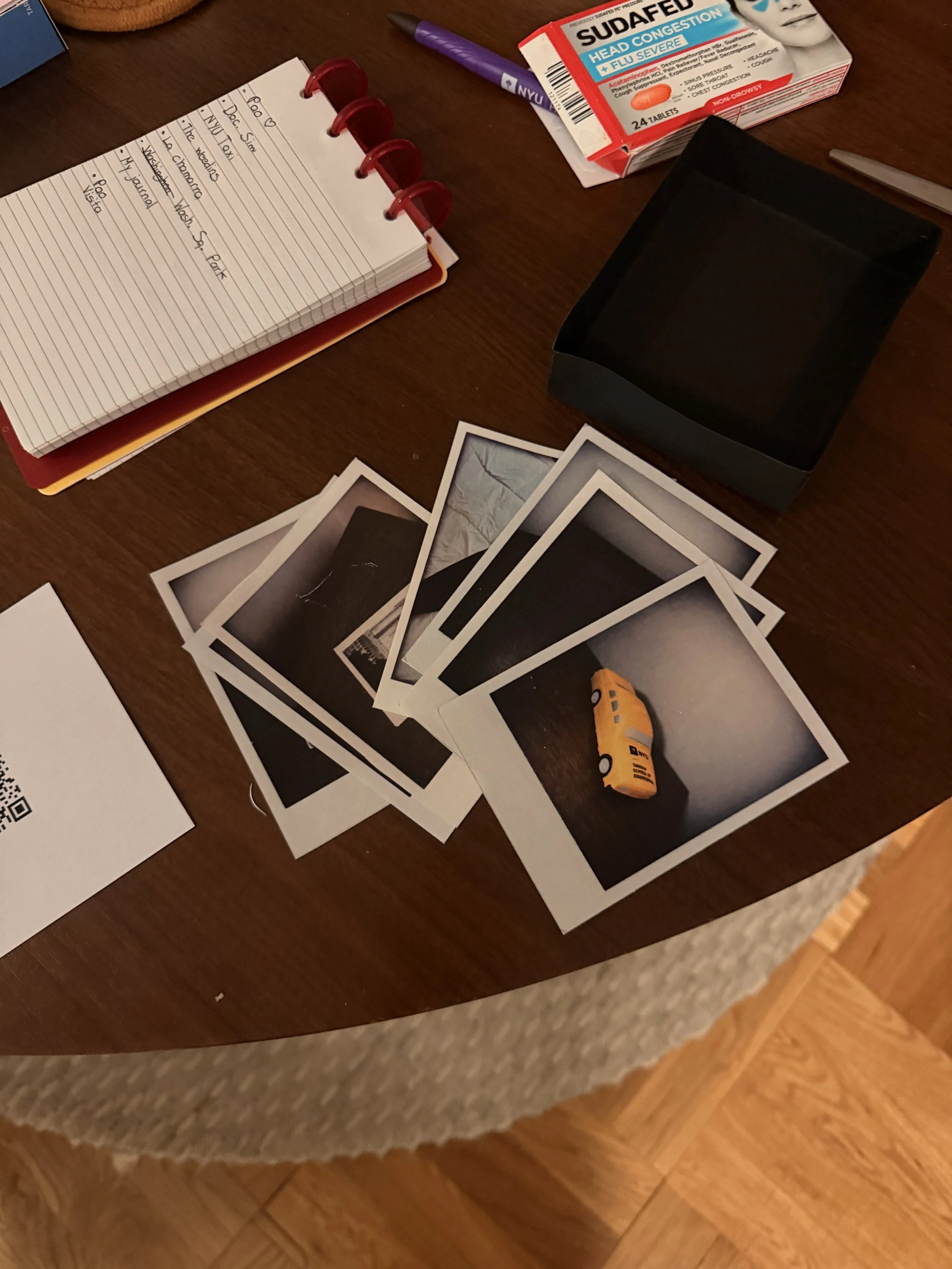
Back home, they open the capsule and discover a collection of Polaroid photographs. Since physical photographs are extremely rare in the future, they are fascinated. They notice QR codes on the back but have no idea how to use them.
Curious, they visit a vintage technology store, where the owner explains that the codes require an ancient smartphone. The owner finds an old iPhone 17, which the student borrows to scan them.
For the first time in 125 years, my voice is heard again, narrating the memories and stories behind each object. What initially seemed like a collection of old photographs becomes a personal connection to someone from the past, preserving not just the objects, but the meaning behind them.
Process Book
Step 1 – Selecting the Objects
I began by choosing objects that represented different experiences and memories from my time in New York. Some were connected to school projects, while others were ordinary things I had collected over the past few months. I wanted to choose objects that might seem insignificant to someone else but carried personal meaning for me.
Step 2 – Photographing the Objects
Once I selected my objects, I photographed each one. Since I wasn't planning to preserve the physical objects themselves, I wanted their photographs to become the main visual representation of my collection.
Step 3 – Creating the Polaroid Designs
After taking the photographs, I imported them into Canva and edited them into a Polaroid-style format. I chose this aesthetic because Polaroids are often associated with memories, nostalgia, and personal moments, which connected well with the purpose of my time capsule.
Step 4 – Recording and Editing the Stories
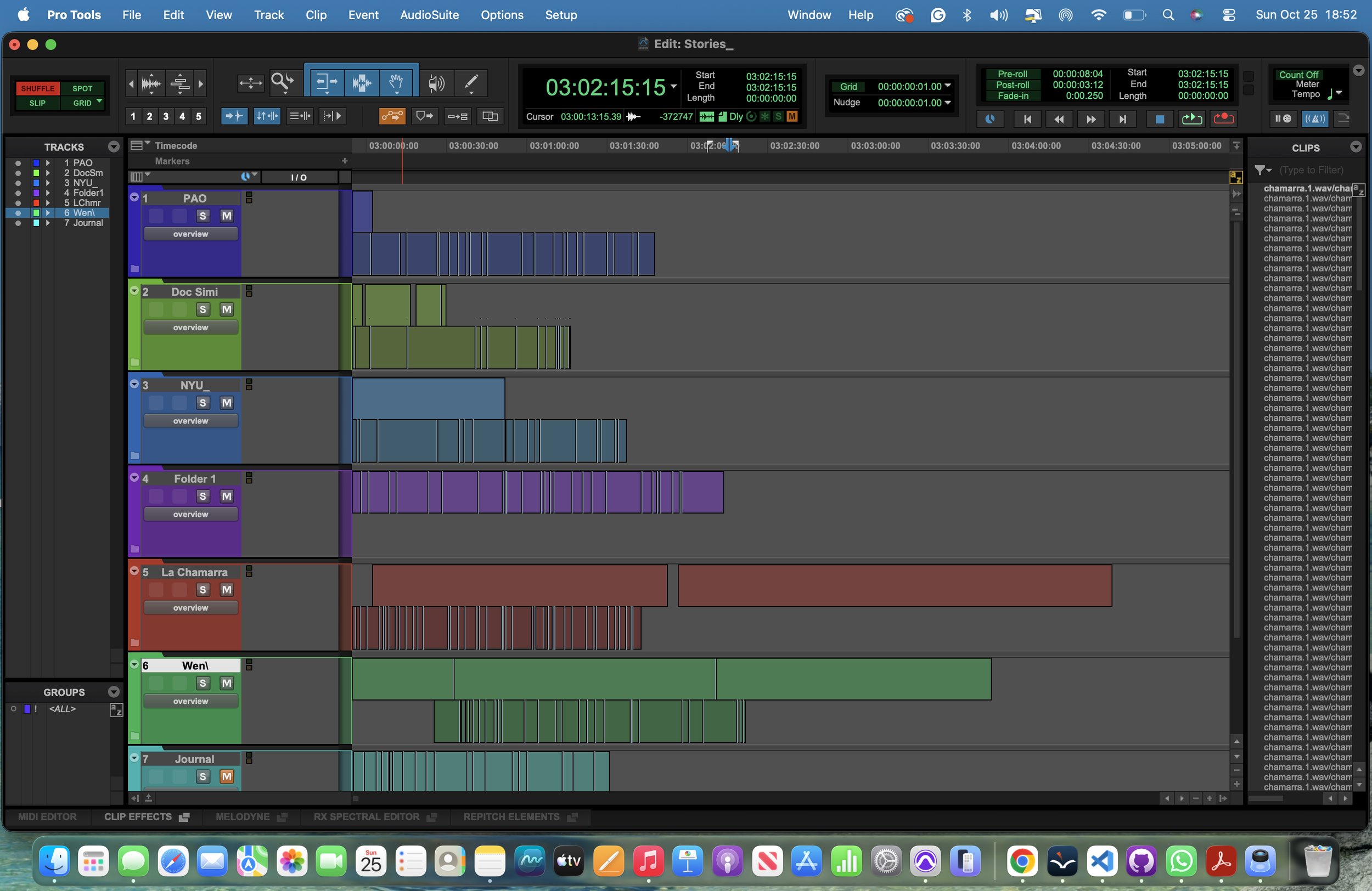
I then worked on organizing the stories behind each object and recording them in my own voice. After recording, I edited the audio to make the stories clearer and easier to follow. This was one of the most important parts of my process because I wanted the recordings to communicate not only what the objects were but also why they mattered to me.
Step 5 – Printing and Adding the QR Codes
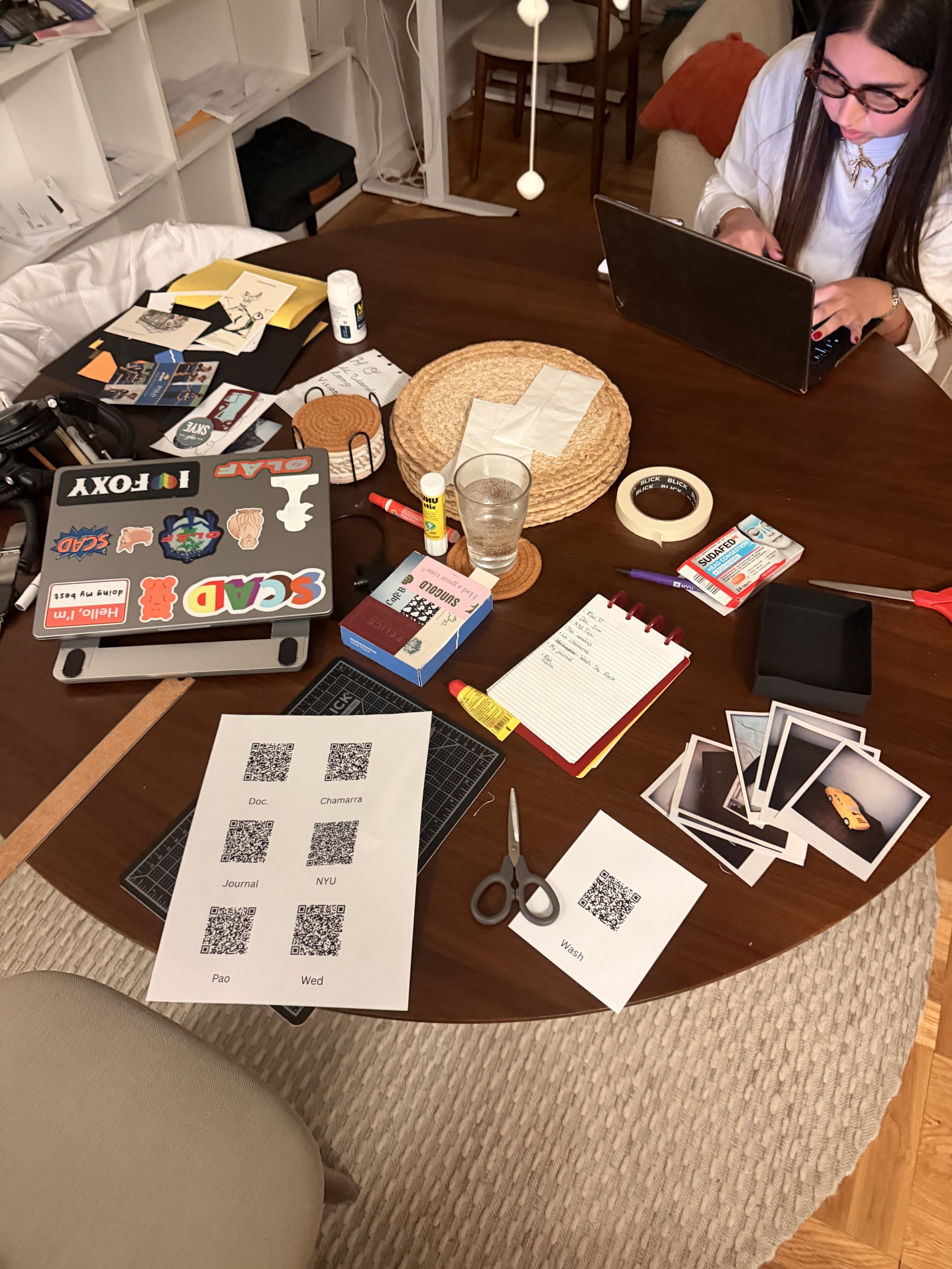
Once the photographs and recordings were ready, I generated QR codes linking to the audio files. I printed the Polaroid designs, cut them out, and attached the corresponding QR codes to the back of each photograph. This created an interactive experience in which someone can first encounter the image and then discover its story by scanning the code.
Step 6 – Final Assembly
Finally, I brought all the elements together and assembled my time capsule. I wanted the final result to be simple but meaningful, allowing the photographs and audio recordings to remain the focus of the experience.
Through this process, I explored how photography, physical design, and sound can work together to preserve personal memories. My goal was not just to create something that could survive over time, but something that could communicate the emotional meaning behind the objects I chose.
